

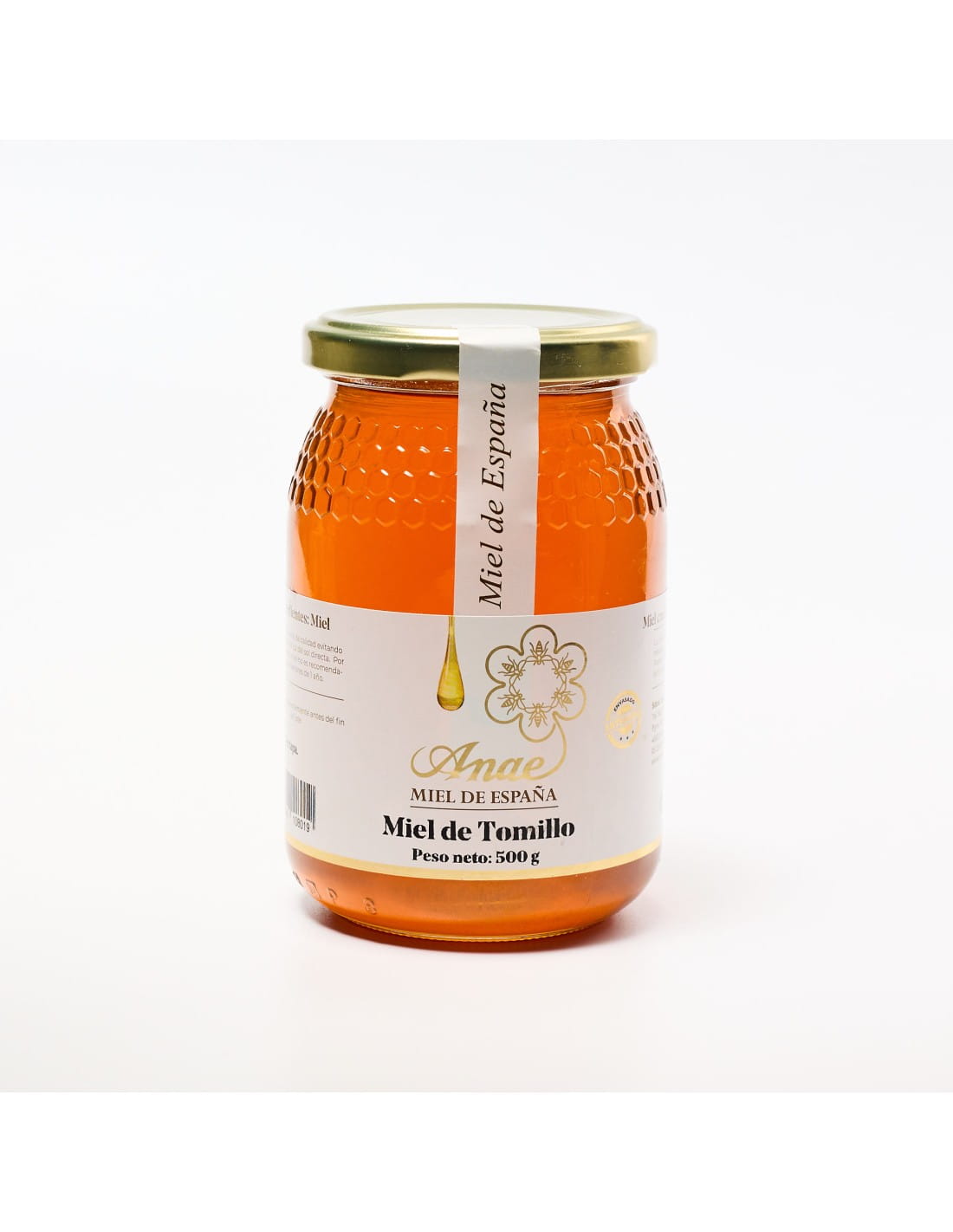
Thyme flower honey 500g
Description
Thyme honey is made from the nectar of small, lilac-pink flowers of common thyme (Thymus vulgaris L.). This plant blooms from early June to late July. The plant is most abundant in the Mediterranean countries, although it is also grown in Poland.
Honey is quite thick and keeps its liquid consistency for a long time. It has a unique amber color with a slightly red tinge. The sweet, long-lasting taste of thyme honey is emphasized by a herbal and spicy note. Its aroma is also distinctive - you can smell the flowers of the plant it comes from. In addition to the ingredients typical of all honey varieties, this honey includes substances with strong antimicrobial properties, i.e. thymol and carvacrol, which are also responsible for the characteristic taste and smell of thyme honey. Thyme honey looks particularly attractive. Its deep, ruby-amber color means that it is sometimes called "red honey". As a result of crystallization, it becomes brighter and its shade becomes more orange. It has a slightly sour taste, but is nevertheless considered one of the tastiest honeys.
Unique properties of honey from thyme flowers:
➢ antioxidant; it has been shown that of the various types of honey, thyme honey has the highest content of vitamin C - an important antioxidant. Vitamin C helps, among others to fight the effects of the so-called oxidative stress,
➢ it supports the treatment of diseases of the upper respiratory tract; is an excellent cough antidote. Like all honey, it contains simple sugars and proteins, antioxidants, enzymes, minerals, and vitamins. However, thyme honey owes its special properties to the presence of thymol oil with strong antibacterial and anti-inflammatory properties. Therefore, it is an excellent support for problems with upper respiratory tract infections, bronchitis and laryngitis, diseases of the oral mucosa, and flu,
➢ it is helpful in skin diseases; accelerates the wound healing process,
➢ effective in the fight against ulcers, helpful in diseases of the stomach, intestines, gastric neurosis, flatulence, gastritis, inflammation of the small and large intestine, flatulence; supports digestion,
➢ has diuretic properties,
➢ helpful in gynecological diseases (especially in vaginitis caused by Trichomonas vaginalis), as well as in inflammation of the urinary tract;
➢ due to the presence of antimicrobial and anti-inflammatory substances, thyme honey is a valuable aid in the treatment of diseases caused by microorganisms, especially by gram-positive bacteria.
The aroma of honey is strong, clear, with a specific hint of spicy thyme. The high content of organic acids and the highest total acidity among European nectar honeys make this honey subjectively less sweet and clearly acidic. However, the vast majority of thyme honey consists of sugars. The smallest percentage belongs to polysaccharides, and the largest, reaching 75% - monosaccharides. In addition, thyme honey contains slightly more glucose than fructose.
Of course, you should always remember that honey is primarily a food product. Therefore, the use of thyme honey in the kitchen should not be overlooked. Apart from the traditional spreading of bread, it is worth using this type of honey as an addition to beverages, as well as sauces and marinades for meat.
Nutritional information:
➢ Nutritional / average values 100g.
- Energy value 1401 kJ 330 Kcal
- Proteins 0.4 g.
- Carbohydrates 82 g.
- Fats / Lipids 0 g.
➢ Nutritional values / average 8g.
- Energy value 113 kJ 26.4 Kcal
- Proteins 0.03 g.
- Carbohydrates 6.6 g.
- Fats / Lipids 0 g.
Remember not to expose honey to a temperature higher than 40 degrees Celsius, because at this temperature the beneficial enzymes and proteins contained in it are destroyed and its therapeutic value decreases.
Production country: Spain
500g